
Dogs, Gates, and the Town of Dunnelow

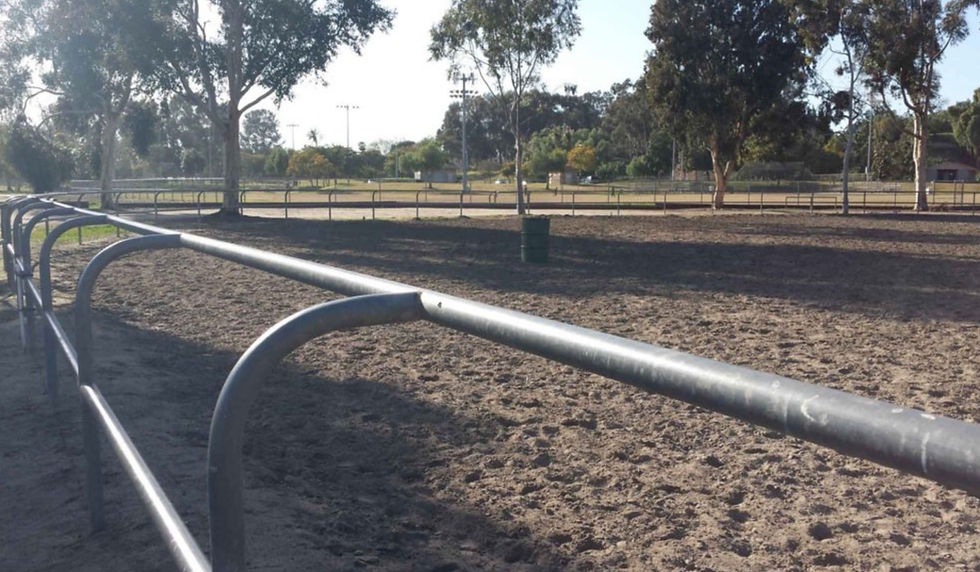
In the small unincorporated town of Dunnelow, County of Bigelow, State of California, there was a wide, dusty open field where dogs had run, rolled, trained, and played freely for as long as anyone could remember. Old-timers swore the field had been there before the stoplight on Main Street. Kids learned responsibility there. Seniors brought lawn chairs. Rain came. Sun came. Dogs came and went. Dogs came in and left happy. Somehow, the dirt survived.

A walking trail looped the park, and nearly every day people slowed their steps to watch the dogs sprint across the open space. Phones came out for photos. Kids tugged at sleeves, thrilled at the chance to pet a dog. Strangers smiled at each other for no reason other than watching animals move freely. The community thrived on it .. not because anyone planned it that way, but because freedom has a way of gathering people.
Then one year, a private group calling itself the "Westside Dogs" was given permission to help “care for” the field.
At first, no one worried. The club said all the right things .. community, safety, preservation. They promised they were just stewards.
Then one morning, the gate was locked.
A sign appeared claiming the field had suffered “serious soil damage” from dogs running and rolling .. something the town had somehow missed for the previous forty years. Only club members could enter now. Membership, the town was told, was cheap and easy .. “just a few dollars a month.”
People who had used the field their entire lives stood outside the fence, staring in confusion, like the place had suddenly forgotten who it belonged to.
One of them was Spirit Ransom.

Spirit had long red hair that caught the sunlight when she walked, and a way with dogs that didn’t come from books or badges. It came from her grandfather in Kentucky, where summers were spent on open land with her sister, learning how animals think long before learning how people argue.
Her grandfather believed dogs listened better when you listened first. Spirit never forgot that.
She trained dogs the way he taught her .. patiently, quietly, with trust instead of force.
And her dogs were as much a part of Dunnelow’s rhythm as the field itself.
There was Lexi .. a fast, athletic purebred female who moved like the wind and watched the night like it was her job. When Lexi ran, people stopped walking just to watch. She ran like she understood the joy of motion itself.
There was Jess, an Australian Cattle Dog .. sharp, focused, always alert. Jess stayed close to Spirit, dependable and steady, and still found time to corral the other dogs in the park like she had a whistle nobody could hear.
And then there was Pixie.
Pixie was small .. black .. an Italian Greyhound–Chihuahua mix who seemed to exist mostly for comedy. Kids adored her, though Pixie preferred adults, choosing laps carefully like a seasoned socialite. She trotted through the park as if she owned it, stopping traffic with nothing more than a sideways glance.

They weren’t just dogs.
They were part of the scenery, part of the heartbeat of the park. Part of the reason strangers smiled at strangers.
Spirit didn’t shout. She didn’t break locks. She did something far more irritating than anger.
She asked questions.
She asked how a field that survived decades of dogs suddenly became fragile overnight. Spirit sent many unanswered emails to Park and City staff on their violations of their own codes. She asked why a public space could be closed without a public vote. She asked why “affordable” membership didn’t match what families were actually paying. She asked how a private group could be given control of a public park? Spirit's husband—a lifelong educator—Dakota, used his words and tones to use his 3 minutes to speak at city council meetings of how could a public park land be given to Westside Dogs and be allowed to charge fees for using a public park? Why would the city send police units on people using a public park? Why did Westside Dogs have the power to stop citizens from using a public park? Dakota went and spoke at seven meetings getting to learn where to sit to be on camera and hold up small signs the city couldn't edit, or remove. He and Spirit went to city hall with their dogs and had them run on grass lawn at City hall only to have many city workers come out and pet and enjoy the dogs.

That’s when things got strange.
First, code enforcement inspectors showed up at Dakota and Spirit's home .. someone had complained they owned “too many dogs.” They passed the inspection . . no citations given. The timing was unmistakable .. the inspection happened the same day they had to attend court.
Second, the club’s president hauled Dakota and Spirit into court, claiming they needed protection from them .. not because they threatened anyone, but because they had spoken up. Contacted city workers spoke at City Hall meetings. The case went nowhere. No evidence. A complete waste of time and money .. but the chill lingered.
Third came the police. Again and again, Spirit was reported for “trespassing” in the very field her dogs had used for decades .. four times. Two police units rolling up on a woman and her pets at a public park. Her offense being that she wasn’t a club member, paying club fees for use of a public space. Police said words like "the club had a lease" Not true. You're not a member of the Westside Dog Club so you can't be in the public park. They threatened arrest for trespass but never cited Spirit or Dakota. The last time, a supervisor was asked for and just as the president of Westside Dog Club arrived to sign the citations, the supervisor dismissed them both. The president of Westside Dog Club blocked their route and only moved after the second request by the police to allow Dakota and Spirit to leave the park.
Spirit had already learned what it feels like when authority shows up and pretends the problem is you.
In 2003, she had been diagnosed with stage-four melanoma.
There were surgeries. There were interventions. There were doctors who spoke in careful tones under fluorescent lights that felt very far away from real life. After surgery and continued medical care, Spirit made a choice that many questioned. She stepped away from traditional treatment and began researching on her own.
She tried home remedies. She changed how she ate. She spent time outdoors. She walked. She breathed. She paid attention to her body .. and to the emotional conflicts she carried, working to understand them instead of bury them.
Which remedy worked, she will never know.
What she does know is this .. she is alive.
And because she lived, she chose to give back.
Spirit talks openly with others facing cancer. Helping others not as a doctor but as a survivor and how she made it. Some survive. Some, heartbreakingly, do not. She doesn’t promise cures. She offers honesty. She encourages people to eat better, to get outside, to see nature, to calm the inner storms that so often go unexamined. She listens .. the same way she listens to dogs.
That habit of listening made her dangerous in a town where some people wanted obedience instead.
Because Spirit wasn’t asking for special treatment.
She was asking why a public field was being treated like a private property, in a public park?
For nineteen months, the lock remained in one form or another .. a lock on the gate, a lock in the attitude, a lock in the way people spoke as if the field belonged to whoever had the key.
Then, eventually, the town unlocked the gate.

Quietly. No announcement. No apology. The field returned to the people as if nothing had happened.
Life moved on .. or so it seemed.
At a town meeting about parks, Spirit stood up and calmly spoke on two agenda items. She talked about keeping open spaces truly public. She talked about designing parks that respected the land instead of flattening it into drawings.
When she finished, another speaker jumped in.
“I oppose Spirit taking over everything,” the person said. “She doesn’t even live in Chance View.”
The room shifted.
Spirit worked in Chance View. She shopped there. She paid taxes there. Her dogs ran there. Her voice carried the same weight as anyone else’s.
And besides .. public comment was never supposed to be restricted to residency. The First Amendment doesn’t come with a zip code requirement. Still, in that moment, the point wasn’t law. It was more intimidation.
The point was silencing.
And suddenly the pattern was impossible to ignore.
When you lock a gate, and someone questions it ..
When you call code inspectors ..
When you file court papers with no evidence ....
When you call police to protect your private version of a public park ....
When the gate reopens, but the resentment doesn’t ..
And when that same voice is later told to sit down and be quiet ..
It becomes clear the “soil damage” was never really the issue.
Because the dirt, after forty years of dogs, had been fine.
The real damage was to something else.
Annexation next level conflict.
The trouble didn’t start in the small dog community of Dunnelow.
It started when the big city arrived.
In a quiet annexation that barely made the paper, Dunnelow was absorbed by the fast-growing city of Chance View, a city that liked to call itself a "smart city" .. new branding, new renderings, new rules.
One of those rules, buried in the books, restricted dogs. No Dogs in Chance View!

Dunnelow had been an old California town .. small farms, backyard ranches, dust on boots, and dogs woven into daily life the way fences and shade trees were. Dogs weren’t a special interest there. They were just .. present.
So when Chance View acquired Dunnelow’s park, the change came quickly.
Plans appeared to replace the dog field with soccer fields. Flat ones. Clean ones. The kind that look good on screens.
That’s when people started showing up.
On a cool, rainy night, Dunnelow residents heard that Chance View planners had collected stacks of glowing comments at pop-up master plan meetings .. comments praising sports fields, efficiency, modernization. Many of those comments came from people who lived in Chance View .. but kept bringing their dogs to Dunnelow.
People who had driven across city lines for years because this park let dogs be dogs.
Now the place they relied on was being erased.
So people spoke.
They spoke at City Council meetings.
They spoke at Parks meetings.
They spoke at Dunnelow community gatherings where folding chairs scraped concrete and voices shook just a little .. not from anger, but from care.
And then, unexpectedly, the Mayor of Chance View, Honorable Mr. McGiver, came to the park himself.
He stood on the dirt. He looked around. He watched the dogs run.

And to the relief of nearly everyone there, he said he supported keeping the dog park in the master plan.
People clapped. Some cried. It felt like a turning point.
Even the Westside Dog Club was called forward to speak about community use, by the Mayor. Their representatives talked about stewardship .. about access .. about how the park had always been open and shared by residents of both Chance View and Dunnelow, and even visitors from other cities who came to see the famous dogs run.
Then the Westside Dog Club’s new president stepped up and said it plainly:
The park, he said, had always been free.
Always open.
Always community-used.
Spirit and Dakota stood there listening, and felt something tighten in their chest.
Because that wasn’t the story they had lived.
They remembered the locked gates.
The attempted usage fees.
The code enforcement threats.
The court filings.
The police calls.
They remembered standing outside a fence, being told a public space was no longer for people like them. "Free loaders, back yard dog owners...You have no reason to be in the park!"
And suddenly, the words on the microphone sounded less like truth and more like revision .. the kind that happens when someone realizes history will be recorded and wants to edit it before it sticks.
Spirit looked around at the crowd .. people who had quietly endured the same thing .. and she knew she wasn’t imagining it.
This was hypocrisy with a fresh coat of paint.
Yes, the lock had been removed.
But the memory of it was still there.
The attitude behind it hadn’t gone anywhere.
And that’s the thing about public land.
You can unlock a gate.
You can change the talking points.
You can smile for cameras and promise inclusion.
But people remember who closed it in the first place.
Dogs don’t forget either.
They remember where they were stopped.
Where they were welcomed.
Where they were free.
And Lexi .. Lexi died during the nineteen-month lockout. She missed her final days of rolling in the sand and running with other dogs. She lost adventures that should have been hers by right, because they belonged to everyone.
In Dunnelow, long before annexation maps and master plans, there was a simple understanding:
Open space doesn’t belong to whoever speaks last at a podium.
It belongs to the ones who show up, day after day, rain or shine .. and leave it better than they found it.
Dogs knew that.
So did we.
And when a town starts treating civic participation like trespassing, it’s worth asking whether the real damage was ever to the dirt at all.
Because even dogs know what that smells like.
And it isn’t soil damage.

By Spirit Ransom | February 16, 2026




Comments